 Lavinia IonescuVIEW PROFILE →
The Rise of Romanian Fashion: How Bucharest and Iasi Became Europe's New Style Frontier in 2026
Romania's fashion scene is having a landmark year. From a museum throne room in Bucharest to the largest catwalk in the country in Iasi, two major 2026 events show a design community stepping confidently onto the international stage.
Romania is rarely the first country that comes to mind when the conversation turns to European fashion, yet 2026 is quietly rewriting that narrative. Across two major events, in the capital Bucharest and in the eastern city of Iasi, the country's designers have shown that a distinctive local voice can command international attention and reshape how the region is seen on the runway.
A Museum Setting for a Milestone
The clearest sign of this momentum came with the fourth edition of Mercedes-Benz Bucharest Fashion Week, held from March 24 to 28, 2026. Organised by the Council of Fashion Designers of Romania, the event turned one of the country's grandest cultural spaces into a runway, staging its main shows in the Throne Room of the National Museum of Art of Romania.
Nine designers took to the main stage, among them Alexandra Șipa, Carmen Secăreanu, Dualitae, M. Marquise, Medeea, Murmur, Rafaela Pestrițu, Rhea Costa and Vestiaire D'un Oiseau Libre. Their Autumn Winter 2026 and 2027 collections leaned into architectural minimalism, experimental construction and conceptual silhouettes, signalling a scene confident in its own creative language.
Designers Who Define the Moment
Among the most talked about names was Murmur, the label of designer Andreea Bădală. Her vision placed the confident, self-aware woman at the centre of the collection, with garments that fuse architectural precision and emotional nuance. It was a statement of intent that matched the ambitious setting and the growing expectations around the country's designers.
Equally compelling was Alexandra Șipa, whose work centred on the exploration of lace. Her collection reflected a fascination with the material's versatility and its deep cultural significance within Eastern European heritage. By reinterpreting a traditional craft through a modern lens, she captured the balance between roots and reinvention that defines much of the new Romanian fashion.
More Than a Runway
What set this edition apart was its willingness to look beyond the catwalk. One of the most striking initiatives was Sightless Fashion, a multisensory experience designed for visually impaired attendees that combined the textures and materials of garments with sound. It was a reminder that fashion can be inclusive and experiential, not merely something to be admired from a distance.
The organisers also introduced three fresh concepts to broaden the appeal of the week. An Archive Sale offered access to designers' past collections, an Influencer House connected creators with digital voices, and a Next Generation Party celebrated emerging talent. Together they framed the event as a cultural gathering rather than a simple sequence of shows.
A Regional Crossroads
The gathering also underlined Romania's role as a regional hub. Designers from five countries took part, with talent arriving from Romania, Poland, Ukraine, Hungary and Moldova. That cross-border mix positioned Bucharest as a meeting point for Central and Eastern European creativity, drawing fashion editors from prestigious publications and buyers from major global retailers.
The Largest Catwalk in the Country
If Bucharest offered prestige, the eastern city of Iasi offered sheer scale. From May 22 to 25, 2026, Palas Park hosted Romanian Fashion Week as part of the sixth edition of Romanian Creative Week. The numbers were remarkable, with a catwalk stretching nearly 40 metres and some 91 square metres of screens surrounding the runway.
The event brought together around 200 designers and roughly 100 models, making it one of the most ambitious fashion productions the country has staged. It was organised by the Creative Industries Employers' Federation, powered by Banca Transilvania and hosted within the Palas shopping centre, a blend of commercial backing and creative vision.
A New Wave in Iasi
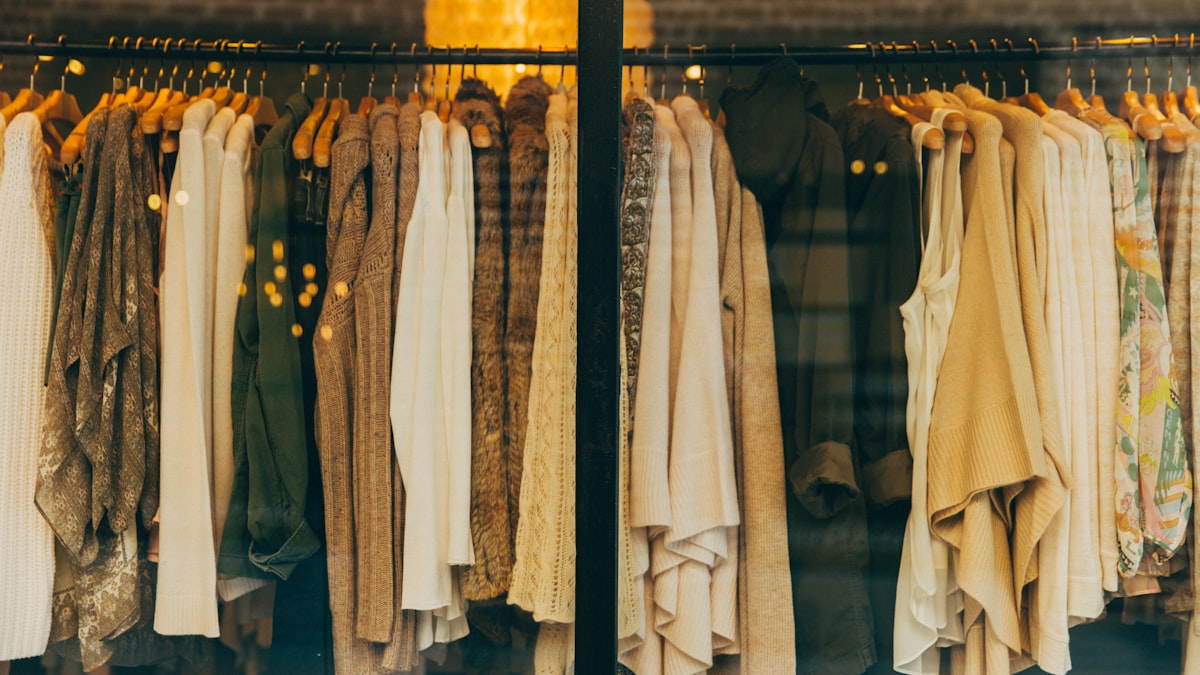
The programme was carefully curated across several sections. The Romanian Designers show on May 24 was overseen by Ovidiu Buta, while the RFW New Wave and RFW Academia segments, held on May 22 and 23, were coordinated by Ioana Ciolacu and Lucian Broscățean. The line up featured established names such as Irina Schrotter, Scapadona, Andrea Tincu, Ramona Bîzbac and Tudor Halațiu.
Behind the scenes, the production carried the polish of an international event. The makeup was handled by a Lancôme team coordinated by Alexandru Abagiu, while the hair styling was led by a Philips team under Sorin Stratulat. Such partnerships reflect how seriously the industry now treats these showcases and how far the ambitions of Romanian fashion have travelled.
A Year to Remember
Taken together, the two events tell a coherent story. In the span of a few months, Romania moved from the margins of the European fashion map toward its centre, powered by designers who honour local heritage while speaking a global creative language. For a country long overlooked in this field, 2026 may be remembered as the year its fashion truly arrived.