 Lavinia IonescuVIEW PROFILE →
Beyond the Niche: How Modest Fashion Became a $100 Billion Global Force
Once dismissed as a specialist category, modest fashion has quietly grown into one of the industry's most powerful engines, worth over $100 billion in 2026. From Paris hosting its first Modest Fashion Week to booming demand across Asia, here is how covering up became one of style's biggest business
For years, the fashion conversation has been dominated by luxury price hikes, creative director shuffles and the eternal tug-of-war between quiet luxury and maximalism. Yet running quietly alongside these familiar stories is a phenomenon of enormous scale that has largely escaped the mainstream spotlight. Modest fashion, once dismissed as a narrow niche, has grown into one of the most powerful and fastest-expanding forces in the entire global apparel industry.
A market measured in the billions
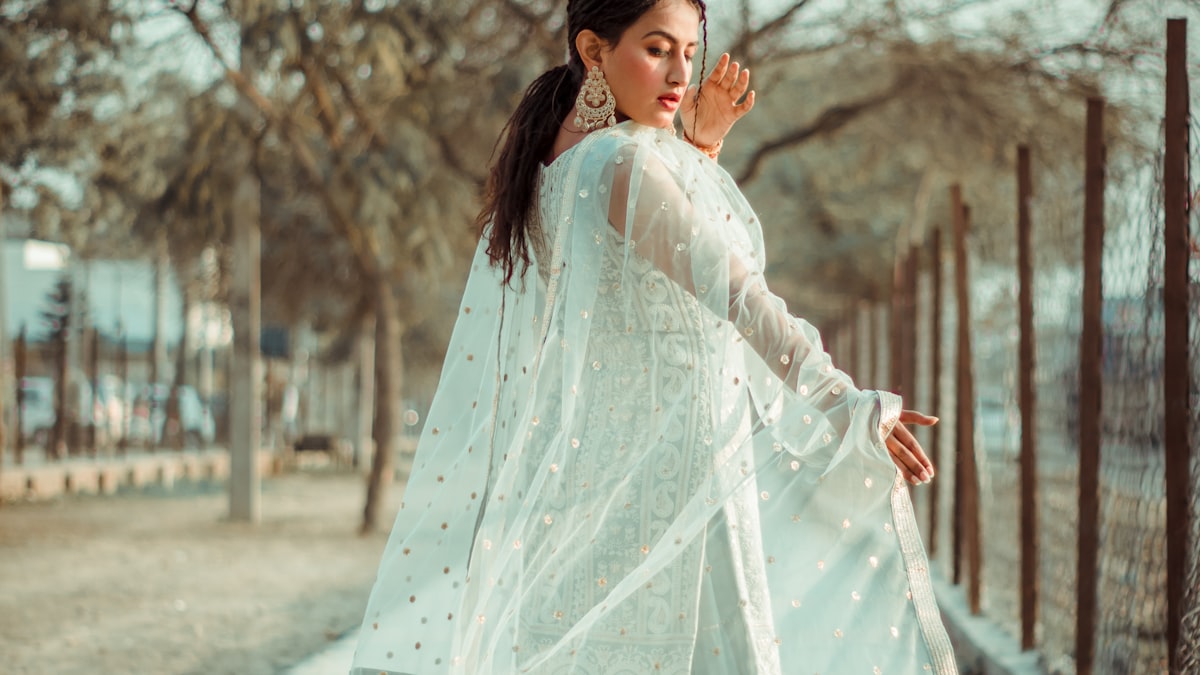
The sheer scale of this sector is what makes it impossible to ignore any longer. The modest clothing market reached a staggering 101.93 billion dollars in 2026, and it is projected to expand to 162.29 billion dollars by 2035, representing a healthy compound annual growth rate of around 5.3 percent. This is not a fringe trend, but a major pillar of the global economy in its own right.
Other forecasts paint a similarly robust and even faster-moving picture of the years ahead. One projection sees the market climbing from 105.53 billion dollars in 2026 to reach 147.87 billion dollars by 2031, expanding at an even brisker annual rate of 6.98 percent. Regardless of the precise figures, every serious analysis points in the same unmistakable direction: sustained, powerful and long-term growth.
The purchasing power behind these numbers is immense and deeply significant. Muslim consumers alone were estimated to be spending around 318 billion dollars on clothing as far back as 2022, and the overall market is forecast to top somewhere between 375 and 400 billion dollars within just a few years. Such spending places this demographic among the most influential consumer groups in the world of fashion today.
From niche to the Paris runway
Perhaps the most telling sign of this transformation is not a statistic, but a location. The modest fashion industry has decisively evolved from a specialist segment into a mainstream global market, and nowhere was this clearer than in the French capital. In April 2026, Paris hosted the eleventh edition of Modest Fashion Week, marking the event's first-ever appearance in one of the world's most influential and closely watched style cities.
The symbolism of that moment cannot be overstated for anyone who follows the industry. For decades, Paris has served as the ultimate gatekeeper of fashion legitimacy, the stage upon which trends are anointed and careers are made. By opening its doors to modest fashion, the city effectively confirmed what the sales figures had long been suggesting, that this movement now sits firmly within the fashion establishment.
This mainstreaming is also visible in the way conventional labels approach the category. Where modest styling was once confined to specialist retailers, elements of it, from longer hemlines to looser silhouettes and elegant layering, increasingly appear in the collections of mainstream and luxury houses alike. The line between modest fashion and simply fashionable dressing is becoming ever more blurred.
What is driving the boom
Several powerful forces are converging to fuel this remarkable expansion. The first is demographic: a growing global Muslim population represents an enormous and youthful consumer base with a strong and consistent demand for stylish yet modest clothing. This demographic momentum provides a solid and expanding foundation upon which the entire market can continue to build for decades to come.
Economics plays an equally crucial role in the story. Rising disposable income across key markets in the Middle East and Southeast Asia means that more consumers than ever can afford to spend on quality fashion that reflects their values. As these economies continue to develop and their middle classes swell, the appetite for elevated, design-led modest wear grows in tandem.
Finally, there is a broader cultural shift toward acceptance and inclusivity. Modest styling is increasingly embraced across diverse consumer groups, including many who are not driven by religious considerations but simply prefer more covered, comfortable and versatile clothing. This widening appeal beyond its original core audience is precisely what allows the category to outpace many traditional fashion segments.
A global, not regional, story
It would be a mistake to view this purely as a Middle Eastern phenomenon, because the geographic heart of the market lies elsewhere. The Asia-Pacific region is the undisputed leader, commanding the largest market share while also exhibiting one of the highest growth rates, at roughly 6.38 percent annually. This surge is driven above all by powerful and rising demand in the giant markets of China and India.
Ultimately, the ascent of modest fashion offers a valuable lesson for an industry often fixated on Western trend cycles. It demonstrates that some of the most significant growth stories are unfolding among consumers and in regions that the traditional fashion capitals have long overlooked. As the sector marches confidently toward ever greater heights, modest fashion has firmly established itself not as a niche, but as one of the defining commercial forces shaping the future of style.